The signs of a damaged sewer line, before it becomes a backup

A blocked line and a broken line produce similar symptoms and completely different work. What separates them is not how bad the backup is — it is the pattern around it, and what a camera sees when it gets there.

Describe what the line has been doing
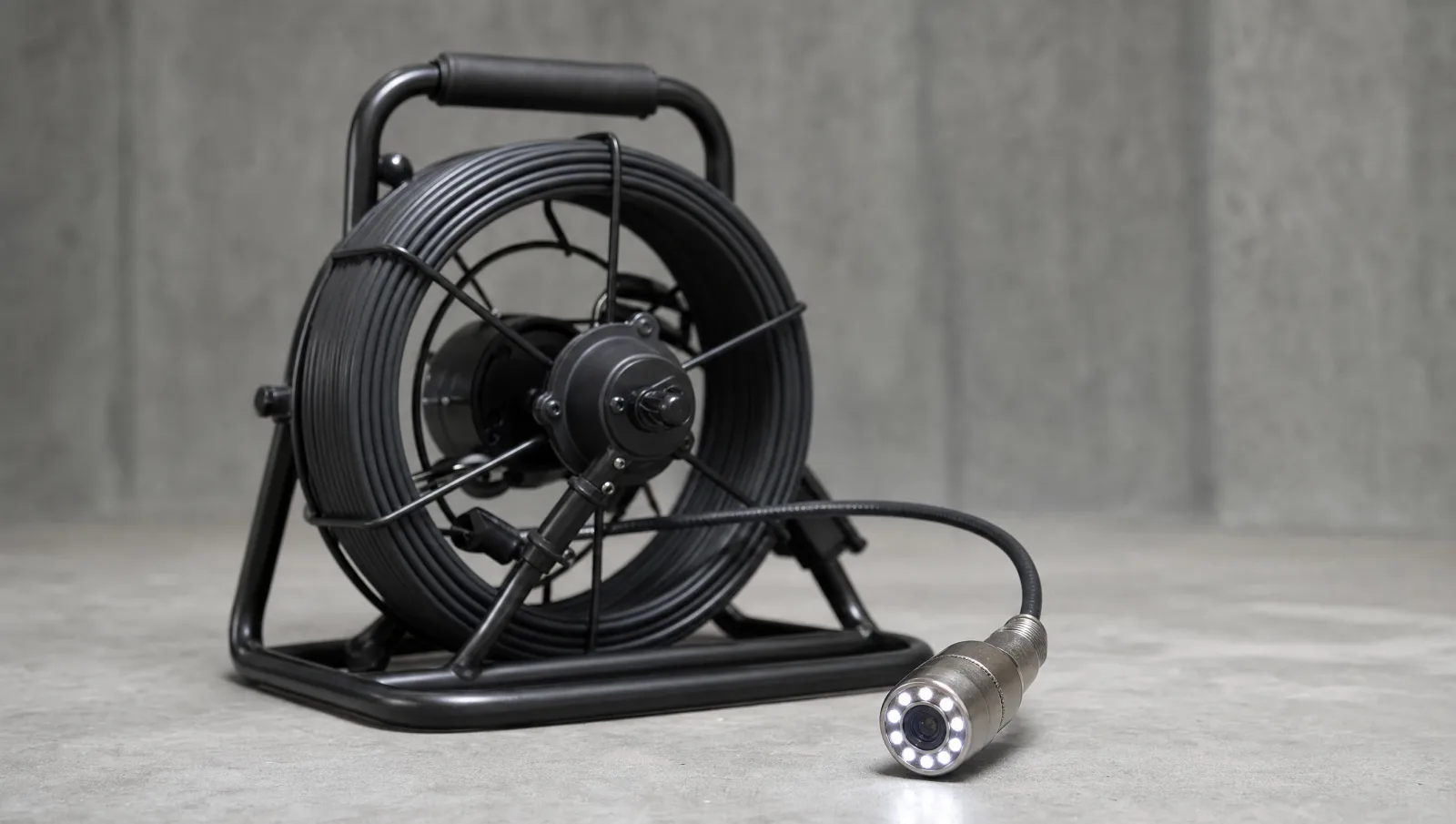
A push camera reel with coiled fibre cable and a compact lens head ringed by small lights, resting on a concrete surface.

What points at damage rather than a blockage

  • Backups that keep coming back after being clearedSomething in the line is catching waste repeatedly. Roots through a joint, an offset, or a sag will all do this, and none of them are removed by clearing.
  • Problems that track the weatherWorse during heavy rain means groundwater is entering the pipe through openings that should not exist. That is a structural symptom, not a capacity one.
  • A patch of lawn that is unusually green, lush or softWaste water feeding the soil from a break below. It is a strong indicator, and it also tells you roughly where along the run to look.
  • Ground that has sunk, or paving that has dropped along the lineSoil washing into a break and settling. This is one of the more serious signs, because it suggests material is leaving the ground around the pipe.
  • Sewer smell outdoors, or indoors with nothing backing upGas escaping from a cracked line. A smell with no drainage symptom at all is easy to dismiss and frequently structural.
  • Rodents or insects appearing with no obvious entryA break in a buried line is an access route. Unpleasant to think about, and a genuine diagnostic signal.
  • A camera that could not pass a certain distanceA hard stop at a repeatable point is itself a finding. It means something is obstructing the bore — a collapse, a severe offset, or a mass that will not clear.

Why the signs of a damaged sewer line get read as a blockage

A sewer lateral runs at a shallow, constant fall from the house to the connection at the main. It works by gravity, which means it depends on shape: the right slope, a round bore, and joints that line up. A blockage takes away capacity temporarily. Damage takes away shape permanently, and a pipe that has lost its shape then collects blockages as a consequence. That is why the signs of a damaged sewer line usually arrive dressed as drainage complaints. A sag holds standing water, so solids settle at the low point every day until the line closes. An offset joint presents a lip that waste catches on. A crack lets fine roots in, and the root mass becomes the strainer. In every case the thing that gets cleared is the accumulation, not the defect — the line runs freely afterwards, and starts collecting again immediately. The other class of symptom comes from the pipe leaking rather than blocking. Waste going out into soil produces a green patch, a smell, and eventually a void as soil washes away; groundwater coming in during rain overloads a line that copes fine in dry weather. Those are the signs that most reliably distinguish damage from obstruction, because a simple blockage has nothing to do with weather or with the ground around the pipe.

The fork every inspection is trying to reach

The fork every inspection is trying to reachInspection leads to Obstruction? leads to Damage?, then either Cleaning or Repair/replacement.InspectionObstruction?Damage?CleaningRepair/replacement
Cleaning and repair are different conclusions from the same inspection — which is why the inspection comes first.

How damage gets proven rather than assumed

  1. Establish the pattern before anyone opens anythingHow often it backs up, what has been done before, whether rain changes it, and whether anything is visible in the yard. That history separates a first-time obstruction from a structural fault before a camera is even unpacked.
  2. Camera the line from an access pointA camera fed through a cleanout shows pipe material, root intrusion, cracks, offsets, standing water, and where each sits along the run. It is the only instrument that answers "damaged or blocked" directly.
  3. Record the distance to every defectThe measurement is the useful output. It is what turns a recommendation into a scope of work, and it is the difference between repairing one section and replacing the whole run.
  4. Locate the defect above groundA sonde on the camera head lets the position be marked on the surface. That is what tells you whether a repair means a small pit in a flower bed or an excavation across a driveway — which is usually the part that decides the cost.
  5. Insist that footage is inconclusive when it isA short, murky, or early-stopping recording has not cleared the line — it has failed to see it. Treating an incomplete scope as a clean result is one of the more expensive mistakes available here, particularly during a property purchase.

What the findings lead to

Clean and monitor

Fits when: The camera shows deposit or root hair in pipe whose structure is otherwise sound, with no offsets, cracks or standing water.

Trade-off: The least disruptive answer and a legitimate one when the pipe is intact. It is the wrong answer when a defect is visible, because the cleaning interval simply becomes the maintenance schedule.

Spot repair of one section

Fits when: A single localised defect — one cracked length, one offset joint, one failed connection — in a line that is otherwise in reasonable condition.

Trade-off: Far cheaper than replacing the run, and it depends entirely on the rest of the line genuinely being sound. That is a claim the footage should support rather than something taken on trust.

Trenchless rehabilitation

Fits when: A run with multiple faults or root entry points, where the existing pipe still holds its line and shape well enough to work within.

Trade-off: Avoids opening the whole length, which matters when the run crosses hardscape or mature planting. Not every line is a candidate, and the assessment for that is specific rather than general.

Excavate and replace the run

Fits when: Collapse, severe sagging, or a line so degraded along its length that repairing one part simply moves the next failure along.

Trade-off: The largest and most disruptive option, and the only one that resets the line entirely. It is worth arguing hard against on the strength of one defect, and worth accepting when the footage shows the pipe is finished.
What the housing stock here contributes

An older property may still be on a clay lateral, and clay is jointed rather than continuous. Every joint is a potential entry point once the seal degrades, which is why root intrusion and offsets are so much more common on older runs than on modern continuous pipe. Cast iron of a similar era fails differently, corroding from the inside until the bore roughens and then thins. Neither is a certainty on any given house — it is a question the camera answers rather than one the build date settles. Mature planting on an established lot is the other half of it. Roots follow moisture, and in a dry season a lateral that has begun to weep is the most reliable water source available — so a line with one small fault tends to acquire a root mass rather than simply continuing to seep. None of that makes damage inevitable, but it does mean that on an older property with large trees, a recurring backup deserves a camera rather than a third clearing.

Questions people ask

How do I tell a damaged line from an ordinary blockage?

By the pattern rather than the severity. A one-off blockage has a cause you can usually name and does not come back. Damage tends to produce recurrence, sensitivity to rain, symptoms in the yard — a green patch, sunken ground, a smell outdoors — or a camera that cannot pass a fixed point. Any of those move it from a drainage complaint to a structural one.

Is a camera inspection worth paying for separately?

On a first blockage with an obvious cause, often not. On a repeat, it usually costs less than the next clearing and it is the only thing that can tell you whether you are buying a fix or a subscription. It is also the difference between a quote you can evaluate and one you have to take on faith, because it produces distances and defects rather than adjectives.

The video was short and murky. Is that a pass?

No — it is an incomplete inspection, and it should be described that way. Footage that stops early, or is too poor to read, has not established that the line is sound; it has established that the line was not seen. Asking for a better recording is reasonable, and it matters most before a purchase closes, when the footage is being used to justify not investigating further.

Should I scope the sewer before buying a house?

It is one of the few inspections that regularly finds problems large enough to change a purchase decision, and standard home inspections do not include it. It matters most on older housing with clay or cast iron laterals and mature trees on the lot. If a scope is offered by the seller, look at the footage yourself rather than the summary.

Can a damaged sewer line make people ill?

Waste escaping into the ground under and around a house is a genuine health issue, not just an unpleasant one, and sewer gas indoors carries its own hazards. If sewage has surfaced inside the building, keep people and pets away from it, ventilate, and do not attempt to clean it up as though it were dirty water. That part is not a plumbing decision.

How long can a damaged line be left before it has to be dealt with?

It depends on what the damage is. Root intrusion in an otherwise sound pipe can be managed for a while with periodic cleaning, as a deliberate choice with a known cost. A section that is collapsing, or a break washing soil away, is not stable — the ground around it keeps changing, and a sunken patch of yard or paving is a sign that process is already underway.

Describe what the line has been doing

How often it backs up, what was done last time, whether rain makes it worse, and anything visible outside — a green patch, a soft spot, a smell. If a camera has been in the line before, we would like to see that footage.

Request Service