Sewer Line Repair
Establishing what is actually wrong with the lateral before choosing how to fix it.
San Diego water, leak, drain and sewer diagnostics — find the source before anyone opens a wall.
WaterLine ExpertsWhether you are chasing a recurring backup or reading an inspection report before closing on a house, a sewer scope answers the same question: what condition the line is actually in, along its whole length, rather than at the one point a symptom happened to show up.
Schedule a camera pass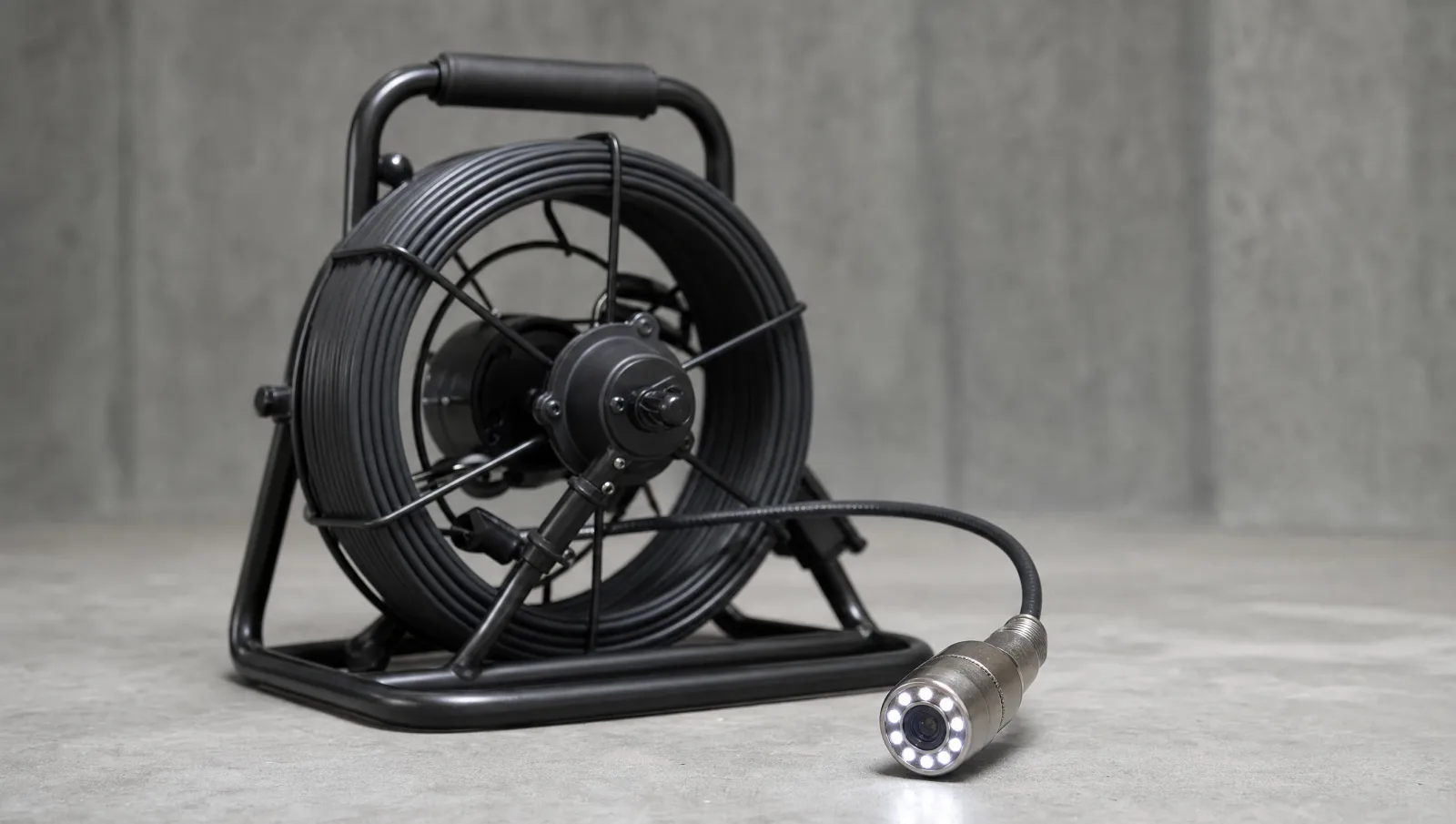
A sewer camera inspection — also called a sewer scope — feeds a waterproof camera on a flexible cable down the line from an access point, usually a cleanout, recording as it goes. It is used for two very different reasons that end up needing the exact same equipment: diagnosing a recurring problem in a house you already live in, and evaluating the condition of a line before you buy one. For an active symptom — a recurring backup, a drain that clogs again a year after it was cleared, a sewer smell with no obvious source — the scope identifies where the problem actually is: a root intrusion at a specific joint, a sag holding standing water, a crack, or an offset from ground settling. Without it, clearing a blockage is treating a symptom on a schedule rather than finding what keeps causing it. For a home purchase, the scope is the only way to see a sewer lateral’s actual condition, since the pipe runs entirely underground and gives no reliable signal from the surface. A house can show no symptoms at all and still have a lateral that is one root intrusion away from a backup — age and material are a clue, not proof, and a scope is what replaces the guess with a look.
Identifies clay, cast iron, Orangeburg, or plastic on sight, and shows wear patterns — scale, corrosion, delamination — consistent with age, which is useful context even where an exact install date is unknown.
Shows exactly where roots have entered, usually at a joint, and whether the joint itself has separated or just allowed roots through a hairline gap — a meaningful difference for what repair applies.
Locates a structural defect to a specific distance from the access point, along with its apparent severity, so a repair method can be matched to what is actually wrong rather than to the whole line by default.
Reveals a low spot in the line holding water between uses — a common cause of recurring odor and slow drainage that a snake or jetter alone will not fix, because the pipe’s grade, not a blockage, is the problem.
A scope shows the inside of the pipe, not the soil around it, and it cannot see past a total blockage or a full collapse. It also cannot tell you who is responsible for a given section — that is a property-line question, not a camera question — or predict exactly when a visibly deteriorating pipe will fail.
A sewer scope is not part of a standard home inspection in California — it is an optional add-on that has to be requested specifically, usually during the inspection contingency period, and it is worth requesting on any house old enough to plausibly have clay or Orangeburg pipe, which in San Diego generally means anything built before the 1970s. The city and county draw the responsibility line at the connection to the public main: the property owner owns the lateral from the building to that point, which is exactly the section a pre-purchase scope is evaluating (per the City of San Diego’s water and sewer projects page and San Diego County’s sewer lateral information page) — a defect found there becomes the buyer’s repair, not a shared one, once escrow closes. When a scope during escrow turns up a real defect, the two practical paths are renegotiating for a credit or repair before closing, or accepting the pipe’s condition and budgeting for the work afterward — but only the scope tells you which situation you are actually in. A report that says the video was inconclusive, or that only reached partway down the line, is worth pushing back on rather than accepting as a clean pass; a scope that stopped short of the connection has not actually cleared the whole lateral.
A house with an existing cleanout is a straightforward setup; one without may need access through a fixture or a roof vent, which adds time.
A longer lateral, or one serving a larger property, takes longer to fully traverse and record.
A blocked line sometimes needs a preliminary clearing pass before the camera can travel its full length — that is a separate step from the inspection itself.
A written report with distances and still images, versus just the raw video, can be priced differently depending on the provider — worth asking for explicitly if it is for a real estate transaction.
On an older property where the lateral’s path has never been mapped, a sonde (locator transmitter) run alongside the camera to trace the pipe’s path on the surface adds a step, and a cost, that a known-route inspection does not need.
No — a general home inspector typically does not run a camera down the sewer lateral as part of a standard inspection. It has to be requested separately, either from the same inspection company if they offer it or from a plumber, and is worth arranging during the inspection contingency window rather than after closing.
A vague or partial video is a reasonable thing to question rather than accept. Ask specifically how far down the line the camera actually traveled, whether it reached the connection to the main, and whether the report includes distances to any defects it did note. A second, independent scope is a legitimate ask when the first one leaves real doubt, particularly on an older property.
That is negotiated between buyer and seller like any other inspection finding — common outcomes are a price credit, a seller-completed repair before closing, or the buyer accepting the condition and budgeting for the work afterward. What the scope itself establishes is only the condition of the pipe, not who ends up paying; that part is negotiation.
There is no fixed interval that fits every property — it depends heavily on the pipe’s age and material. A newer plastic lateral with no history of problems needs it far less than a pre-1970s clay or Orangeburg line, where a scope every few years (or before any major landscaping or hardscape work near the line) can catch a developing problem before it becomes a backup.
No. A total blockage stops the camera at that point, which is itself useful information — it tells you where the obstruction is — but it means the pipe beyond that point is unexamined until the blockage is cleared and the scope is re-run.
It is a reasonable starting assumption, not a certainty. A lateral can have been replaced at some point without obvious signs at the surface, and conversely a newer house can occasionally connect to an older shared or partially original run. It is the reason a scope answers the question directly rather than the house’s age standing in for it.
Tell us whether this is for an active problem or a pending home purchase, and how old the property is if you know. Either way, you get the video and a plain explanation of what it shows — not just a pass or fail.
Request ServicePrefer to call? (619) 391-3249