Drain Keeps Clogging
Why a cleared drain blocks again, and what would actually stop it coming back.
San Diego water, leak, drain and sewer diagnostics — find the source before anyone opens a wall.
WaterLine ExpertsJetting is the most thorough way to clean the inside of a drain, and it is the wrong answer on a pipe that has already failed. Which of those you have is a camera question, and it gets settled before the pressure comes out.
Tell us what keeps blocking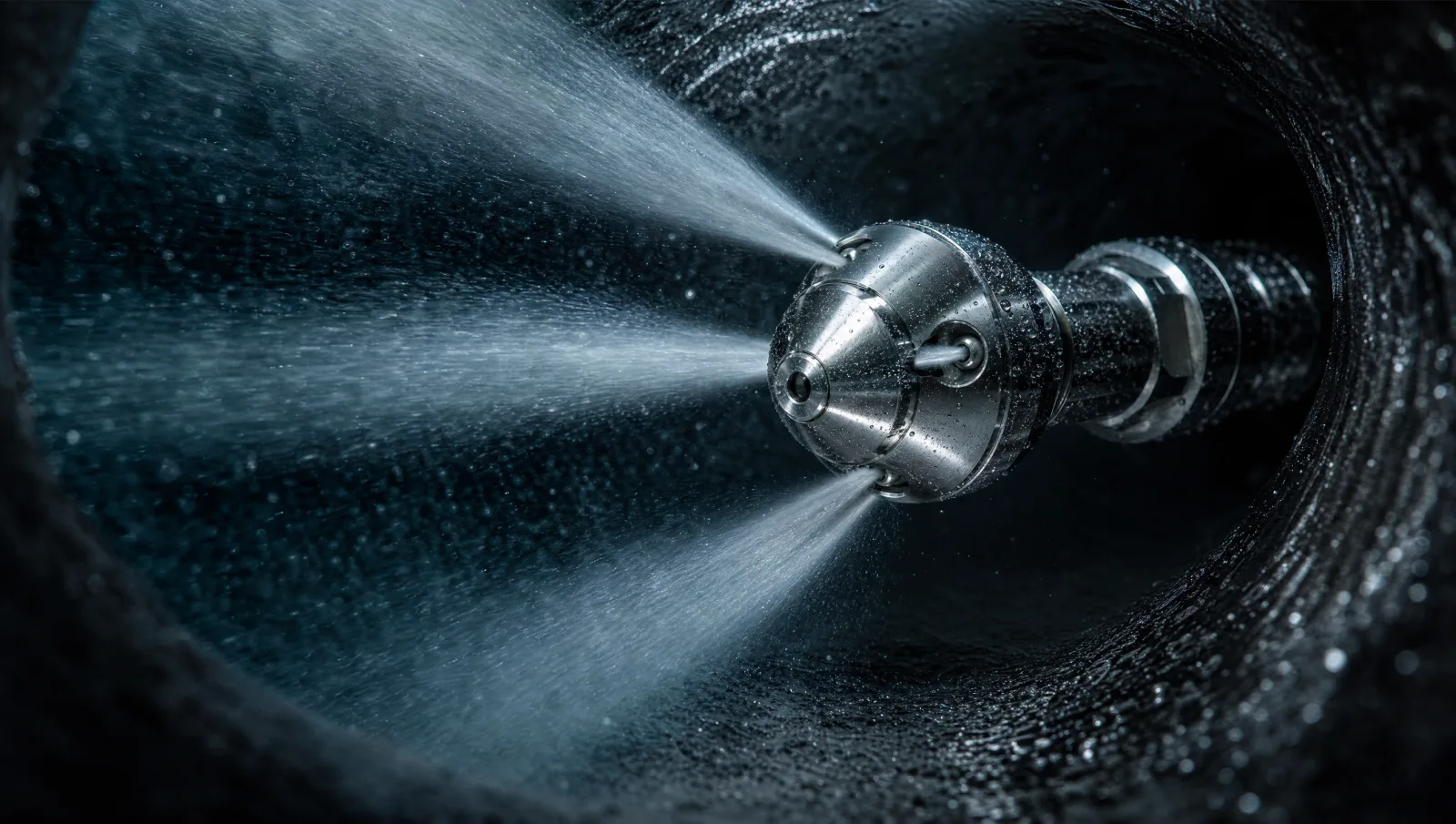
| Jetting is the right tool | Jetting is the wrong tool | |
|---|---|---|
| Condition of the pipe | Structurally sound. Camera footage shows continuous wall, joints in place, no open cracks — dirty rather than damaged. | Cracked, badly corroded, offset at a joint, or crushed. High-pressure water inside a compromised pipe can widen a defect or push material out through it. |
| What is narrowing it | Grease, soap and scale coating the wall, or fine root hair coming through a joint that is still holding together. | A structural fault holding waste back — a sag that ponds, a collapsed section, a joint that has stepped out of line. Cleaning does not change any of those. |
| History of the line | Cleared before and blocked again, because that pattern means material is still on the wall rather than removed. | Never blocked before and blocked suddenly. That usually means an object or a discrete event, and it does not need the full-diameter treatment. |
| What has been established first | A camera pass has confirmed the material and the pipe condition, so the pressure is chosen against a known target. | Nothing has been inspected. Jetting an unseen line is a bet on its condition, and old clay and heavily corroded cast iron are exactly where that bet goes wrong. |
| What you should be spending on instead | Nothing — this is the job that removes the cause rather than reopening a channel through it. | The repair. On a defective line, jetting produces a very clean broken pipe and a bill that bought no durable change. |
Generates the working pressure at the nozzle. Pressure is not a virtue in itself — it is matched to the pipe material and condition, and a competent operator will run well below maximum on old or fragile pipe. The number that matters is the one chosen for your line, not the one on the machine.
Carries the loosened material out of the line. Pressure breaks the deposit down; volume of water is what actually removes it. This is why a machine with high pressure and low flow can leave a line clean at the nozzle and full of debris further along.
Decides what the jets do. Rear-facing jets propel the head up the line and scour the wall behind it; a forward jet opens a path through a solid blockage; a chain or cutting head is for hardened scale and heavy root mass. Choosing the wrong head is the difference between cleaning a pipe and polishing one spot in it.
Establishes pipe material, condition, and what the obstruction is made of — before, so the method is chosen against facts, and after, so the result is verified rather than assumed. On this service it is not an optional extra; it is what makes the pressure decision defensible.
Records how far along the line each finding sits and where that point is above ground. If the footage shows a defect, this is what turns it into a spot in the yard that a repair can be planned against.
Working through an existing access point is straightforward. Creating one, or entering through a fixture, adds work before the job starts.
A branch line and a full sewer lateral out to the connection are different amounts of pipe, different equipment, and different amounts of time.
Soft grease comes off quickly. Hardened scale and heavy root mass take multiple passes and frequently a different head partway through.
Old or fragile pipe has to be worked more carefully and at lower pressure, which takes longer. It can also end the job early, if what the camera shows means jetting should not proceed.
Two camera passes add time. They are also what makes the pressure decision defensible and the result verifiable, so they are not the place to economise.
If the footage shows a defect, the useful spend moves from cleaning to fixing. That is a separate scope and it should be quoted as one, not folded into the cleaning bill.
Why a cleared drain blocks again, and what would actually stop it coming back.
Two different operations on the same pipe, and the condition that decides between them.
Why roots keep coming back to the same spot, and what actually closes the way in.
What pipe bursting and CIPP lining actually cost, and which one a given line qualifies for.
La Mesa's root-intrusion pattern and Chula Vista's older bayside lines are the two places scouring the full pipe wall — rather than just clearing the immediate blockage — tends to matter most.
It can, on the wrong pipe. High-pressure water inside a line that is already cracked, badly corroded, or offset at a joint can widen the defect or force material out through it into the surrounding ground. On a sound pipe, at a pressure chosen for its material, it does not. The difference between those two situations is visible on camera footage and invisible from the surface, which is the whole reason the inspection comes first.
No. It is more thorough, which is a different claim. A cable machine is the right tool for restoring flow quickly, for a discrete obstruction, and for a line that has never blocked before — and it is what gets used to open a blocked line far enough to inspect it. Jetting earns its place on recurring problems where material on the pipe wall is the cause. Treating one as universally superior is how the wrong tool ends up on an old clay line.
On a sound pipe with the buildup genuinely removed, considerably longer than a cabled line — years rather than months, because the channel is the full diameter rather than a bore through the deposit. Two things shorten it: what keeps going down the drain, and any defect still letting roots or debris in. Neither of those is a criticism of the cleaning.
It removes the root mass far more completely than cutting does, so the interval before it returns is much longer. It does not close the opening the roots came through. Roots grow back toward the same moisture through the same failed joint or crack, so a permanent answer means repairing or relining that section. Anyone promising that cleaning ends a root problem for good is overstating it.
On this service it is the thing that makes the service safe to perform. Without it, the pressure is being applied to a pipe of unknown condition, and old clay and corroded cast iron turn up often enough in older housing stock that the risk is real rather than theoretical. Reasonable practice is a pass before and a pass after, and you should be given the footage from both.
Usually not as the first move. A completely blocked line holds standing water, which means nothing can be inspected and the jetting head has nowhere to work. The normal sequence is to restore some flow first, look at what is there, and then decide whether jetting is the right follow-up — which sometimes it is not.
Then we say so, show you the footage and the distance measurement, and stop rather than jetting it anyway. A damaged line can be cleaned very effectively and it will still be damaged, so the money is better spent on the repair. That is a different scope of work and it gets quoted separately rather than absorbed into the visit.
Which line, how often it has been cleared, and how long each clearing held. If anyone has put a camera down it before, say so and tell us what they found — that changes what needs doing before anything else happens.
Request ServicePrefer to call? (619) 391-3249