A leak triage checklist you can run yourself, with the meter you already have

Before anyone opens a wall or a slab, this is the sequence that narrows a suspected leak to a likely area — pressurized system or drain, inside or out, urgent or not. Ten minutes with the meter, done in the order below, changes what a visit is actually for.

Send us your results
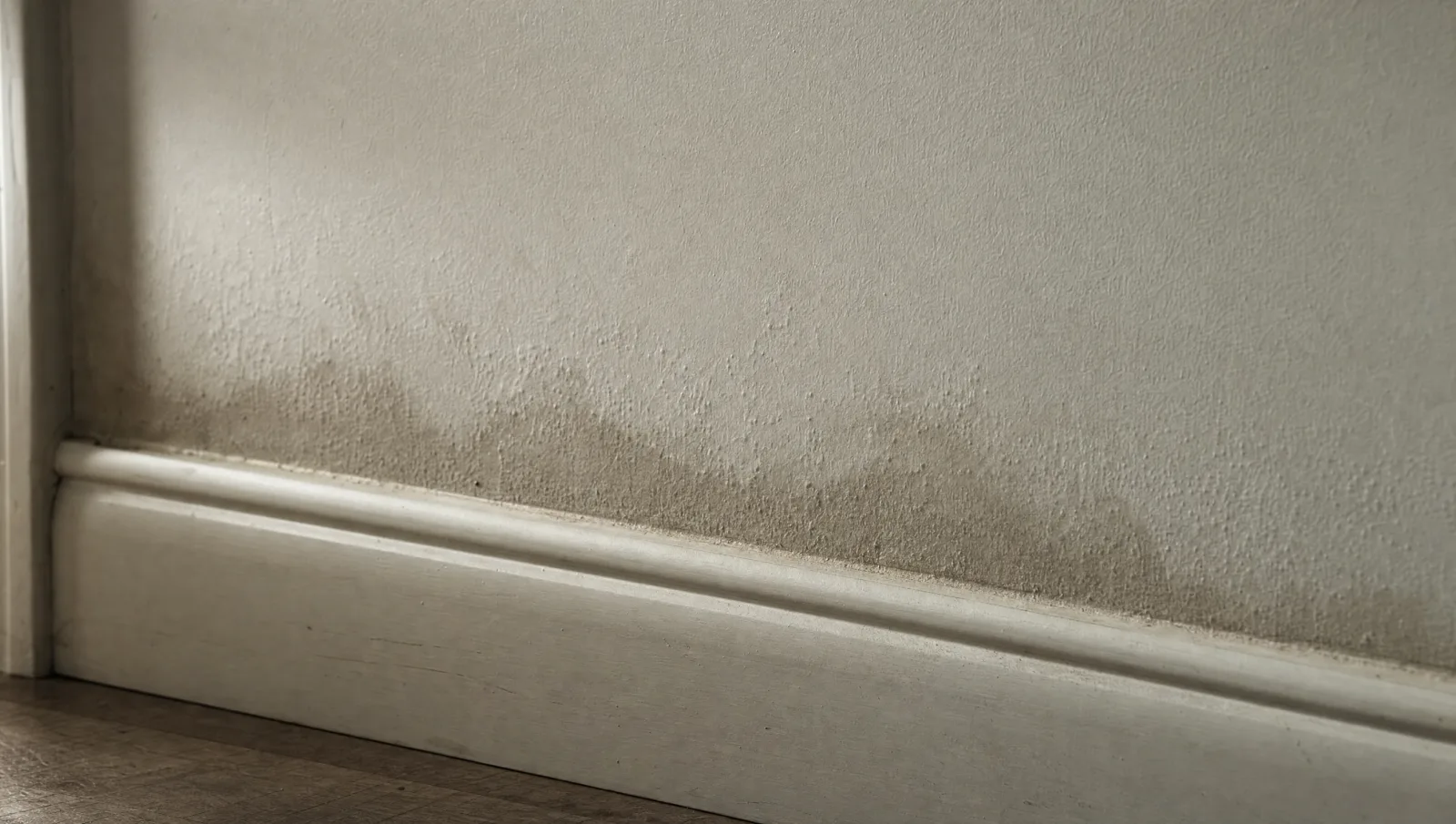
Close view of a baseboard and lower wall with a dark tidemark of moisture wicking upward through the paint.

Why this checklist starts at the meter, not at the symptom

A leak triage checklist is only useful if the first step produces a hard fact rather than another guess, and the water meter is the one instrument every house already has that measures the whole pressurized system at once. Everything else — a warm spot, a smell, a sound — tells you about one location; the meter tells you whether water is leaving the system at all, before you have found where. That ordering matters because the alternative is starting from a symptom and working backward, which only works if the symptom happens to be near the actual leak. A slab leak under a hallway can show its first visible sign in a bedroom on the other side of the house, or nowhere at all until the bill moves. Running the meter test first, then interpreting whatever secondary signs are present, is what keeps the search from being anchored to wherever the leak happened to become visible.

Run these in order

  1. 1. Turn off everything that uses water, including anything automaticEvery fixture, appliance, ice maker — and specifically the irrigation controller, since it can start mid-check with nobody touching anything. If it has a timer, it needs to be off, not just unused right now.
  2. 2. Find your water meter and note both readingsThe digit readout and the small low-flow indicator (a triangle, star, or spinning dial that moves with any flow at all, even flow too small to move the digits). Write both down.
  3. 3. Wait 15–30 minutes, touching nothingLonger is more conclusive for a very slow leak, but 15–30 minutes catches almost everything worth acting on urgently.
  4. 4. Read the meter againLow-flow indicator moved at all: water left the system continuously during the wait — that is close to conclusive for a leak on the pressurized supply side. No movement: a continuous supply-side leak is unlikely, and the cause is more likely something intermittent below.
  5. 5. If it moved, isolate house from yardIf there is a shutoff valve where the service line enters the building, close it and repeat the reading for another 15 minutes. Movement with the house isolated puts the loss on the buried line between the meter and the house. No movement puts it inside the building.
  6. 6. If it did not move, rule out the two most common false alarmsA silently running toilet: add a few drops of food coloring to each tank, wait 20 minutes without flushing, and check the bowl for color. Recent irrigation cycle: check the controller’s run history for anything scheduled near your billing period.
  7. 7. Walk the property for the secondary signsA patch of yard that stays soft, warm, or unusually green; a section of floor that feels warm with no heating underneath it; a musty smell with no visible damp; or a faint continuous sound of running water when the house is otherwise quiet. Any one of these, paired with meter movement, narrows the search significantly before anyone arrives.
  8. 8. Note what you found, in orderWhether the low-flow indicator moved, whether isolating the house changed the result, and any secondary sign from the walk-through. That sequence — not just "I think I have a leak" — is what turns a visit into a targeted diagnosis rather than a fresh search from zero.

What your result most likely means

  • Meter moved, and moved again after isolating the housePoints at the pressurized system inside the building — a supply line under a slab or in a wall is a strong candidate, especially paired with a warm floor spot or a sound behind a wall.
  • Meter moved, but stopped moving once the house was isolatedPoints at the buried service line between the meter and the house — a soft or green patch of yard along that path is the corroborating sign to look for next.
  • Meter did not move, but the toilet dye test showed colorA running toilet flapper, not a hidden leak. Inexpensive to fix and worth ruling out before assuming anything structural.
  • Meter did not move, and no dye or irrigation explanation fitsA continuous leak is unlikely right now. Worth repeating the same 30-minute test on a day with typical usage patterns, since some leaks are intermittent (a fixture, not a supply line).
  • No meter movement, but a musty smell or warm patch is present anywayA leak that predates this test — water has already reached materials out of sight and may currently be slow enough not to register on a half-hour check. Worth investigating regardless of what the meter showed.

What your result changes about the next step

Continuous meter movement, isolated to inside the house

Points toward acoustic and thermal leak detection rather than exploratory opening — locating equipment finds the spot before anything gets cut.

Continuous meter movement, isolated to the yard side

A service-line leak is often faster to locate and less invasive to reach than one inside the structure, since it is not competing with finished flooring or walls.

A running toilet identified by the dye test

Usually a low-cost fixture repair, not a plumbing emergency — a flapper or fill valve replacement resolves most cases.

No leak found, but the bill is still elevated

Worth comparing the billing period length and checking for an estimated (not actual) reading before assuming the utility measurement itself is correct.

Secondary signs present regardless of the meter result

A musty smell or warm floor spot is worth acting on even if the timed test came back clean, since it indicates water that has already been present, not necessarily water still actively leaking during your test window.

Questions people ask

Do I need any special tools to run this checklist?

No — just access to your water meter, which is usually at the curb or near the street-facing property line, and food coloring for the toilet test if you get that far. Nothing here requires opening a wall, floor, or fixture.

What if I can’t find my water meter?

It is usually in a small in-ground box near the sidewalk or property line, sometimes marked "water" on the lid. If it is genuinely inaccessible or shared with neighboring units, the isolation steps (5 and 6) still work using an interior shutoff valve if your home has one, though the initial meter-movement read becomes harder to get on your own.

The low-flow indicator moved just barely. Does a tiny amount still count?

Yes. With every fixture off, the correct reading is none at all — any registered movement means water is leaving the system somewhere. What changes with the amount is how urgent it is, not whether it is worth reporting.

I ran the test and everything came back clean. Should I just stop worrying?

If there is no other sign — no warm spot, no smell, no yard patch, no history of a jumped bill — a clean result is a reasonable place to stop for now. If any of those signs exist despite a clean meter test, it is worth investigating anyway, since some leaks are too slow to register in thirty minutes but have already been running for months.

Can I use this checklist for a suspected drain or sewer problem instead of a supply leak?

Not directly — this sequence is built around the water meter, which only measures the pressurized supply side. A drain or sewer issue (recurring clogs, a sewer smell, gurgling) needs a different starting point; a camera inspection, not a meter reading, is what actually shows what is happening in that system.

What should I have ready when I contact a plumber after running this?

The full sequence of what you found: whether the indicator moved, whether isolating the house changed the reading, the toilet dye result, and any secondary sign from the walk-through. That is what lets a visit start as a targeted diagnosis instead of repeating the same test from scratch.

Send us what the checklist showed

Whichever result you landed on — meter movement, isolation result, any secondary sign — tell us exactly what you found. That sequence is what lets us bring the right equipment on the first visit instead of guessing.

Request Service