Slab leak repair cost swings on which of three methods your house needs, not on the leak itself

A pinhole leak in a supply line under the slab can be a small job or a large one, and almost none of that difference comes from the leak — it comes from whether locating it, opening the slab, or replacing the line altogether is the right way to reach it.

Get it located before pricing the fix
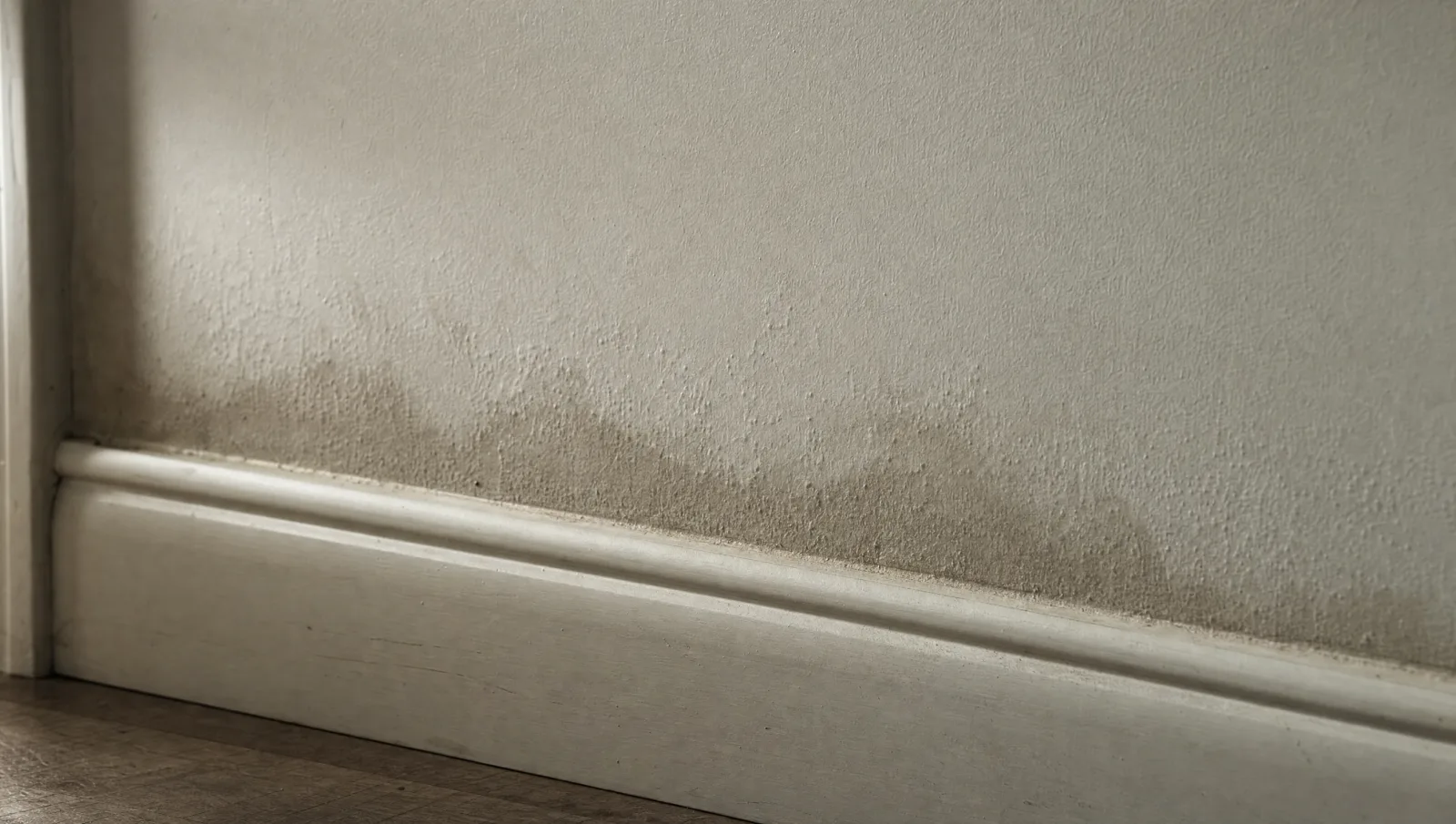
Close view of a baseboard and lower wall with a dark tidemark of moisture wicking upward through the paint.

Why "how much to fix a slab leak" does not have one answer

Slab leak repair cost is a question about method as much as it is a question about damage, because slab leak repair is not one procedure — it is three, and which one applies changes both the price and what happens to the floor. A spot repair finds the exact failure point through acoustic and thermal locating, opens a small section of slab directly over it, and fixes that one point. It is the least invasive option, and it is only available when the leak is a single, isolated failure on an otherwise sound line. A reroute abandons the damaged section entirely and runs a new line through the attic, walls, or an accessible path around the slab rather than through it — no concrete gets opened at all, at the cost of a longer run of new pipe. A full repipe replaces the whole water-supply system, chosen when the failure is one symptom of a line that is failing throughout — old galvanized steel or copper thinned by decades of mineral scale, where the first pinhole is rarely the only one waiting. Which of the three actually applies is exactly what locating equipment and, often, a look at the rest of the system are for — a price given before that step is a guess at which of three different jobs you are buying.
The three real options, and what decides between them

Spot repair

Fits when: A single, precisely located failure on a line that is otherwise sound — usually one pinhole from localized corrosion or a compromised joint, not a system-wide pattern.

Trade-off: Least disruption and lowest cost, but only addresses the one point found. Does not tell you the rest of the line is fine on its own — that judgment comes from the pipe’s age and material, not from this repair.

Reroute

Fits when: The damaged section is hard to reach under the slab, or accessible ceiling and wall space makes a new path realistic without breaking concrete.

Trade-off: Avoids opening the floor entirely, but uses more pipe and more labor than a spot repair, and only solves the section it reroutes — a second leak elsewhere under the slab is a separate job.

Full repipe

Fits when: The current leak is one of several, or the pipe material and age (aging galvanized steel or thin, scaled copper) make more failures likely across the whole system rather than just at this one point.

Trade-off: The largest job and the largest number, but it is the option that stops paying for the same underlying problem one leak at a time.

What decides the number, beyond which method applies

Locating cost before any repair starts

Acoustic and thermal locating is billed as its own step because it usually is one — it is what narrows a slab-wide search to a specific spot, and skipping it means guessing where to open the floor.

What sits over the leak

A leak under bare slab in a garage is a different access problem than the same leak under finished flooring, cabinetry, or a load-bearing interior wall.

Water damage already present

Drying equipment, mold remediation, and flooring or drywall replacement are frequently billed separately from the plumbing repair, and by the time a leak shows on the surface, some of that is often already needed.

Whether the repair is one point or the whole system

A repipe covers every fixture the water system feeds; a spot repair covers one failure. Comparing their prices directly is comparing two different scopes of work, not two prices for the same job.

Permits, where required

A repipe in particular is more likely to require permitting than a single spot repair — factor the timeline in alongside the fee.

Whether insurance is involved

Homeowner’s policies commonly cover the sudden water damage a slab leak causes, but not the plumbing repair itself, which is treated as maintenance — worth confirming with the carrier before assuming either way.

Questions people ask

Why did one plumber quote thousands more than another for the same leak?

The most common reason is that they are not proposing the same repair. A spot repair, a reroute, and a full repipe are three different jobs with three different price floors, and a quote given without locating equipment or a look at the rest of the system is a guess at which one applies. Ask each contractor which of the three they are quoting and why, before comparing the numbers directly.

Is locating the leak an extra cost on top of the repair, or part of it?

It is usually billed separately, and that is a reasonable structure rather than padding — locating is real work with its own equipment and time, and it is what turns "somewhere under the slab" into a specific point to open. Repairing without it means opening the slab based on a guess, which risks paying to open the wrong section.

If I have had two slab leaks already, should I assume I need a full repipe?

It is a reasonable thing to raise with whoever locates the second leak — a repeat failure is exactly the pattern that points toward the pipe material and age being the real problem rather than isolated bad luck. It is not automatic, though; two unrelated pinholes on an otherwise sound line do happen. The honest answer depends on what the pipe looks like, not on the leak count alone.

Does a spot repair mean the rest of my plumbing is fine?

No — it means that one point was fixed. Whether the rest of the system is fine is a separate question, answered by the pipe’s age and material rather than by the fact that one repair went well. A galvanized or heavily scaled system that produced one pinhole is still a galvanized or heavily scaled system afterward.

Will my homeowner’s insurance pay for slab leak repair?

Typically insurance covers the resulting water damage — drying, drywall, flooring — as a sudden and accidental loss, but not the underlying plumbing repair, which is usually classified as maintenance. Policies vary, so it is worth a call to the carrier with the specifics of your leak before assuming either way.

How much does it typically cost just to locate a slab leak, before any repair?

Locating is priced as its own visit in most cases, separate from the repair that follows. The exact figure depends on the equipment needed and how straightforward the search is, but it is worth asking for that number specifically rather than a single bundled figure that hides how much of the cost is diagnosis versus repair.

Get the leak located before pricing the fix

Tell us what you have noticed — a warm spot on the floor, a jump on the water bill, or a sound behind a wall — and whether this is the first slab leak in the house or a repeat. That determines which of the three repair paths actually applies.

Request Service