Periodic cutting or scouring
Fits when: A deliberate, informed choice: the pipe is otherwise sound, the interval is long, and you would rather pay for maintenance than a repair right now.
Trade-off: Legitimate as a plan, not as an answer. It leaves the entry point open, so the cost recurs indefinitely and the fault carries on developing between visits.
Relining the affected section
Fits when: The host pipe holds its shape and line, and the problem is joints or cracks admitting roots rather than a collapse.
Trade-off: Closes the way in without opening the ground along the whole run, which matters when the line crosses paving or established planting. Not every pipe is a candidate, and that assessment is specific to the line.
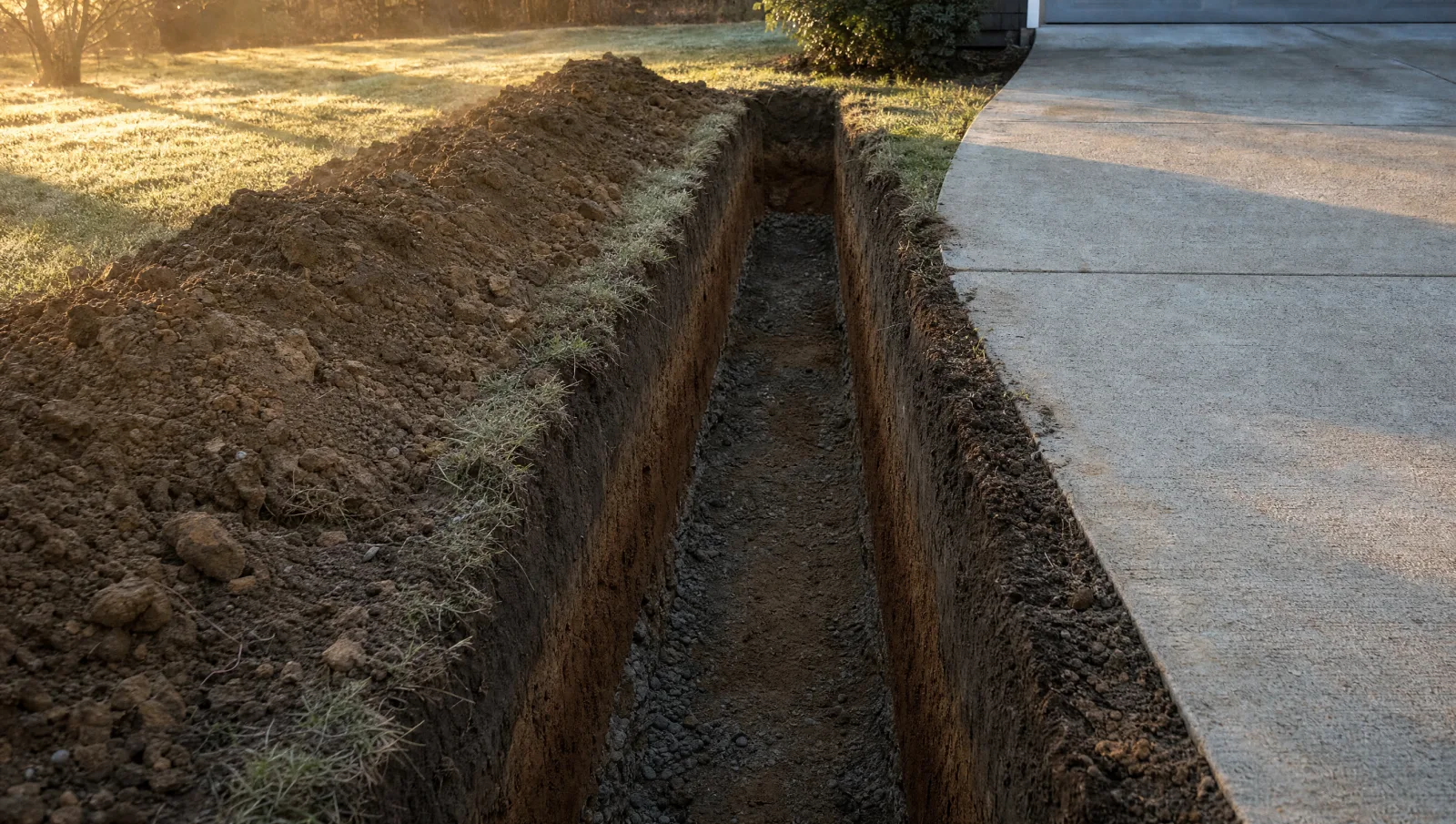
Excavating and replacing the run
Fits when: Multiple failed joints, a collapsed or badly offset section, or a lateral degraded enough that fixing one part simply moves the next failure along.
Trade-off: The most disruptive option and the one that resets the line completely. Justified by what the footage shows, never by the presence of roots alone.
Dealing with the tree
Fits when: Rarely on its own, and it is worth being honest about that. Removing a tree does not repair the pipe, and the fault will still admit groundwater and other roots.
Trade-off: Sometimes sensible alongside a repair when a large specimen sits directly over the run. Root barriers and chemical treatments slow regrowth at best; neither closes an opening.