Water Line Replacement
When the service line itself, not one spot on it, is the actual problem.
San Diego water, leak, drain and sewer diagnostics — find the source before anyone opens a wall.
WaterLine ExpertsThe service line bringing water into the house works under constant pressure, which is exactly why it fails differently than a sewer line and gets replaced with different methods — pricing the two the same way is where a lot of estimate confusion starts.
Get the service line assessed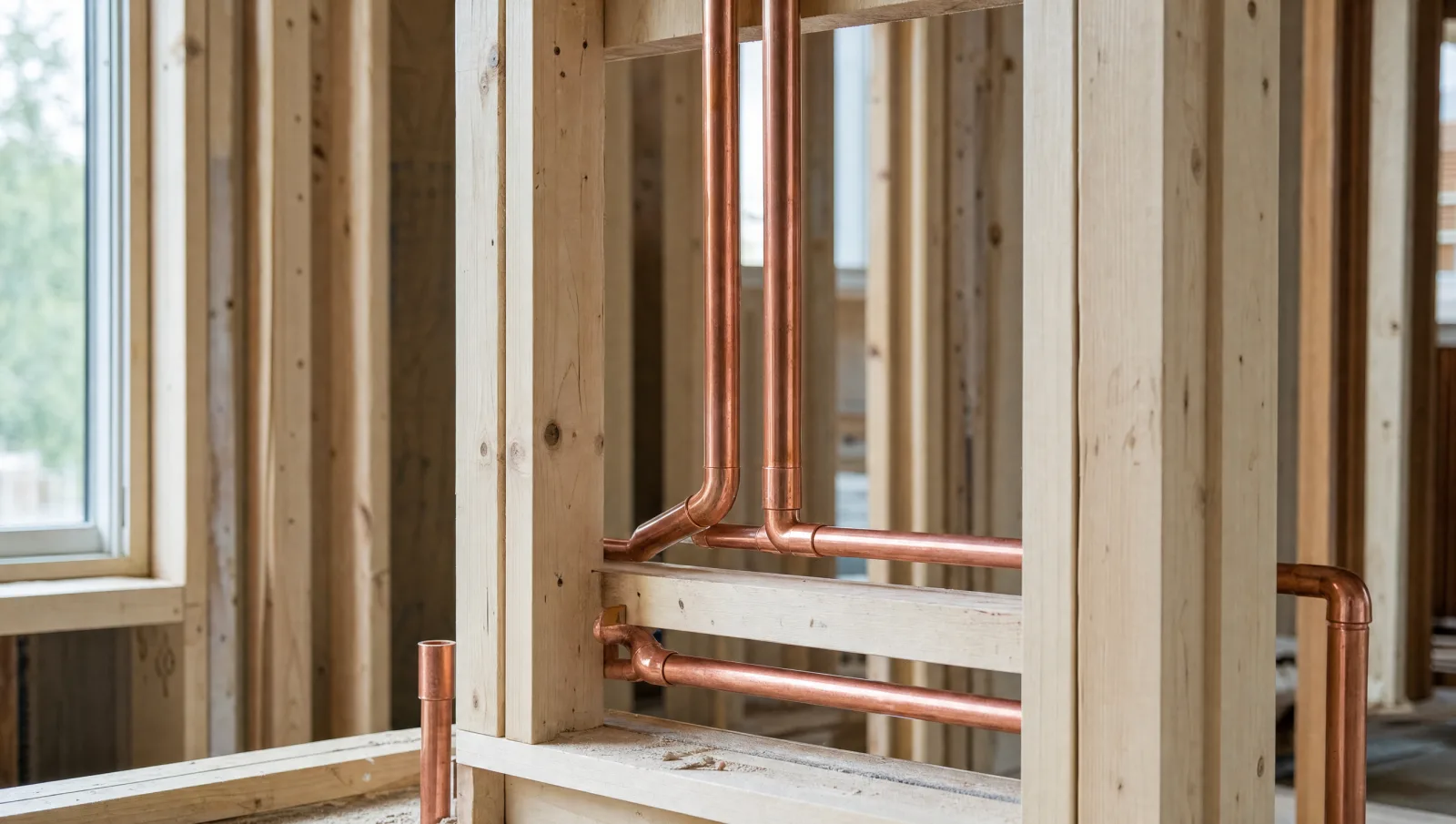
Water line replacement cost gets confused with sewer line replacement cost often enough to be worth separating explicitly, because the two pipes fail for different reasons and get fixed with different tools. A sewer line relies on gravity and slope; it fails mainly at joints, from root intrusion, or from a section settling out of grade. A water service line is under constant pressure around the clock, so it fails from corrosion, from mineral scale thinning the pipe wall from the inside, or from a joint that finally gives way under that constant load — and because it is pressurized, a failure can move a lot of water quickly rather than backing up slowly. That difference carries into the trenchless methods available. Pipe bursting works on both, but the pressure-rated pipe pulled in for a water line has to handle the system’s working pressure continuously, not just carry flow downhill — which is part of why water-line trenchless work is priced and specified differently from a sewer reline even when the length and depth look similar on paper.
| Open-trench | Trenchless (pipe bursting / pulling) | |
|---|---|---|
| What gets disturbed | A full trench along the entire run — driveway, landscaping, or hardscape above it has to be cut and restored. | Two access pits at the ends of the run; the surface between them is undisturbed. |
| Best case for it | A short, shallow run through bare soil with nothing valuable above it. | A run under a driveway, mature landscaping, or hardscape where restoration would otherwise be the largest cost. |
| Pipe material typically used | Copper or PEX, chosen for the specific application and local code. | HDPE pulled through, chosen partly for its ability to be pulled without joints along the run. |
| Effect on pressure rating | New pipe, new rating — a clean baseline. | The pulled pipe is rated for the system’s working pressure; the fittings at each end are where a trenchless job’s quality actually shows. |
| When it is the wrong choice | Long runs under paved surfaces, where restoration cost usually exceeds what trenchless would have cost outright. | Very short runs, or ground conditions (large rock, dense root systems) that make pulling impractical. |
Cost is generally quoted per linear foot; industry cost guides put water line replacement in a broad range depending heavily on method and access, commonly landing well below $50/ft for a straightforward open-trench run through bare soil and considerably higher once depth, method, or restoration complexity increase.
Bare soil, a lawn, a driveway, and mature landscaping are four different restoration problems for the same length of pipe, and restoration is frequently the larger half of an open-trench bill.
A larger-diameter service line, or one serving an irrigation system in addition to the house, costs more in material and fittings than a standard single-family supply line.
Depending on where the failure sits relative to the meter, reconnecting at the utility side may require a separate permit or a scheduled shutoff coordinated with the water provider.
A localized failure near one end sometimes only requires replacing that section; a line failing from age and scale throughout usually does not stay a one-section job for long.
Water service line replacement typically requires a permit and inspection before the connection is finalized — the same planning consideration as a sewer lateral job, on a different timeline.
Not reliably — it depends on length, depth, material, and what sits above the run more than on which system is being replaced. What is true is that the two are priced against different failure patterns and different trenchless methods, so a single "pipe replacement cost" figure without specifying which line is not a useful comparison.
The underlying technique is similar, but the pipe pulled through has to be rated for continuous working pressure rather than just gravity flow, and the fittings at each end matter more, because a pressurized line under-sealed at a joint fails immediately rather than slowly. Confirm the contractor is specifying pressure-rated materials for a water application specifically, not repurposing sewer-line practice.
A localized failure — one identified break near the meter or near the house — can sometimes be repaired or partially replaced. A line that is failing from age and internal scale, especially older copper or galvanized steel, is a different situation, because the same mechanism producing the current failure is present along the whole run.
Generally the property owner is responsible for the service line from the meter to the building, similar to how the sewer lateral is the owner’s responsibility past the connection point — check with your specific water provider, since boundary conventions can vary by utility.
Correctly installed, no — the pulled pipe is sized and rated to match or exceed the existing line’s capacity. Where pressure problems show up afterward, it is usually a fitting or transition issue at one of the two access points rather than the trenchless method itself.
The main supply interruption is typically limited to the final connection and switchover, often a matter of hours rather than days, whether the method is open-trench or trenchless. The rest of the work — trenching or pulling — happens without the line being live yet.
Tell us the age of the house, whether you have had a leak or a pressure change, and whether the line has a history of repairs. That, more than the length alone, is what decides between a section repair and a full replacement.
Request ServicePrefer to call? (619) 391-3249