Sewer Line Repair
Establishing what is actually wrong with the lateral before choosing how to fix it.
San Diego water, leak, drain and sewer diagnostics — find the source before anyone opens a wall.
WaterLine ExpertsA full sewer line replacement gets quoted once a repair or a reline is no longer enough — and the first surprise for a lot of homeowners is not the number, it is learning that the failed section is on their side of the property line.
Get the pipe scoped and priced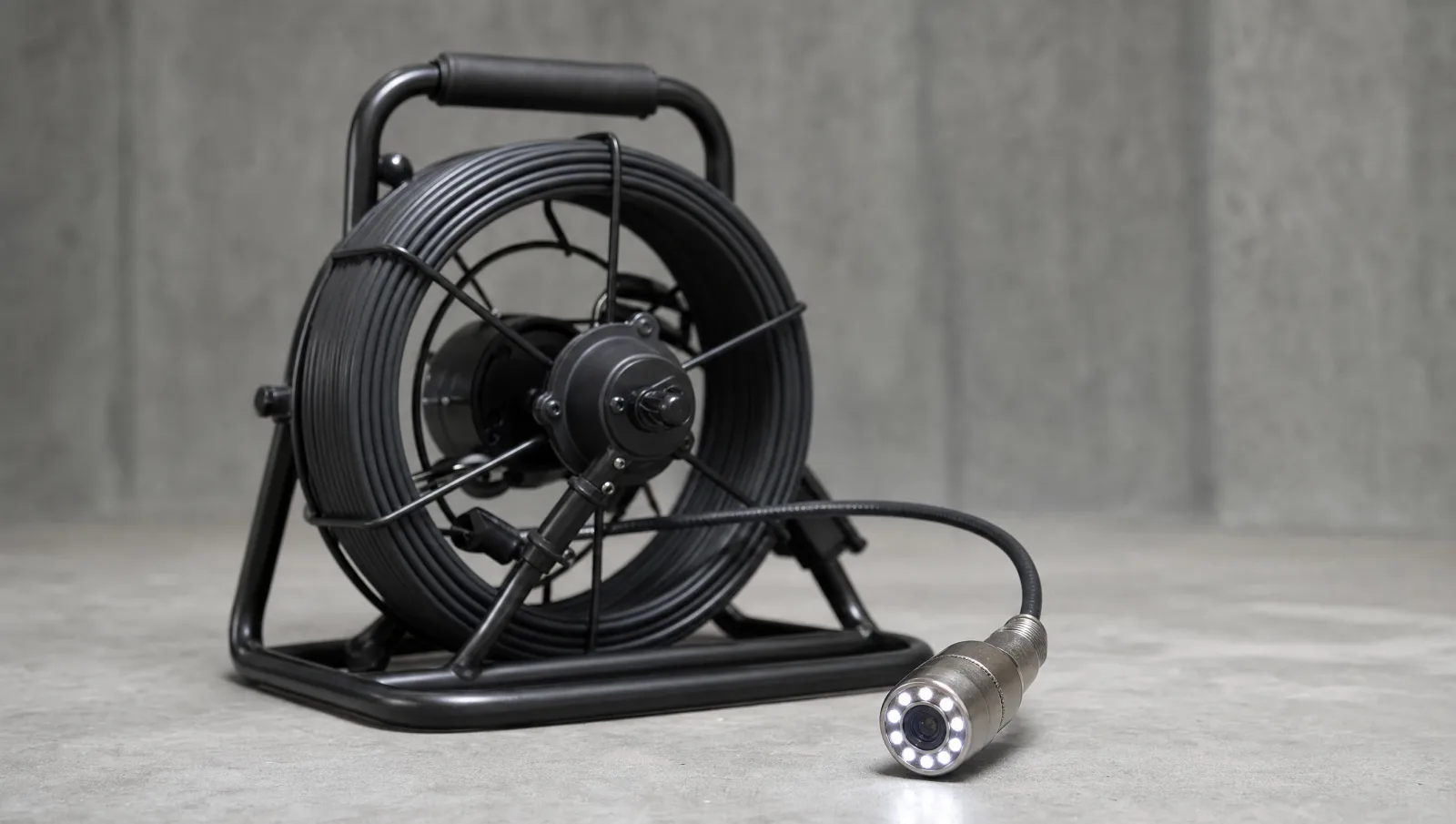
Sewer line replacement cost only becomes the question once a camera pass has ruled out the cheaper answers. A spot repair fixes one identified break in an otherwise sound pipe. Cured-in-place lining rehabilitates a length of pipe that is still round and structurally intact. Replacement is what is left once the line has failed along enough of its length, or collapsed outright, that repairing or lining it would just be paying to delay the same conversation. What usually pushes a line into that category is age and material working together rather than either one alone: a clay or Orangeburg (bituminous fiber) line from before the 1970s that has been slowly failing at every joint is a different situation from a single crack in a modern PVC line. The pipe material and its age are what a camera pass is really establishing — not just where the current problem is, but whether the rest of the run is a few years behind it.
Industry cost data (Angi, HomeGuide, and multiple trenchless and traditional sewer contractor guides, 2025–2026) puts full sewer line replacement broadly between $50 and $250 per linear foot depending on method and depth, with a typical 50-foot residential lateral landing anywhere from $3,000 to over $20,000 — the spread is almost entirely depth, access, and method, not the pipe itself.
A trench that has to go through a driveway, mature landscaping, or a section of hardscape adds restoration cost on top of the pipe work — often more than the pipe work itself. That is the specific cost trenchless methods exist to avoid.
Modern PVC is inexpensive as material; the labor and access to place it are what cost money, and that holds regardless of what is being replaced.
Every connection along the run has to be reinstated, and a lateral serving multiple bathrooms or an addition has more of them than a simple single-line run.
A permitted sewer lateral replacement requires city or county sign-off before it is considered complete — budget the timeline for it, not just the fee.
A run assumed to be one material sometimes turns out to have been repaired in a different one decades ago. That kind of discovery is why an estimate is described as a range until the ground is actually open.
In San Diego, the property owner is responsible for the sewer lateral from the building all the way to its connection with the public sewer main — the city and county own the main line and the connection point, not the private lateral running under the yard (confirmed on the City of San Diego’s water and sewer projects page and San Diego County’s sewer lateral information page). That is precisely the stretch a full replacement usually concerns, which is why the cost lands with the homeowner rather than the utility, even when the failure is well outside the house itself. Age and material track San Diego’s building eras closely enough to be a genuine clue before any camera runs. Homes from the tract-building boom of the 1950s and into the 1970s were commonly laid with clay pipe or, in some pockets, Orangeburg — a bituminous fiber pipe that delaminates and deforms from the inside as it ages, sometimes with no visible surface sign at all. Clay pipe from the same era fails mainly at its joints, which is also where roots get in. A line from the 1980s onward is far more likely to be cast iron or early PVC, both of which hold up differently and fail differently. None of that replaces a camera pass — it is a reason to expect the conversation, not a diagnosis on its own.
Only for the portion they own — the public main and the connection point. The lateral running from the building to that connection is the property owner’s responsibility under both City of San Diego and San Diego County policy. Some water utilities separately offer optional service-line protection plans that cover repairs for a monthly fee; that is insurance you opt into, not something owed to you by default.
A camera pass is the only reliable way. The signs that usually point toward full replacement rather than a fix are: failure recurring at multiple points along the run rather than one spot, a collapsed or badly deformed section, or a pipe material and age (clay or Orangeburg from before the 1970s) that make the rest of the line a near-term repeat of the section that just failed.
Usually not, unless the policy carries a specific service-line rider. Standard homeowner’s policies generally treat a deteriorated sewer lateral as normal wear rather than a covered peril, which is separate from whether water damage caused by a backup gets covered.
Sometimes — a spot replacement of a failed section is a real option when the rest of the line camera-checks as sound. It stops being the right call when the same age and material producing the current failure are present along the whole run, because then a spot fix is paying once for a problem that will recur nearby.
For a typical single-family lateral, the physical work — trenching or trenchless placement, reconnection, and backfill — is often a one to three day job once permits are in hand. Permit approval and any required surface restoration usually add more time to the calendar than the pipe work itself.
That happens, and it is why a written estimate should say what it is contingent on rather than presenting a single fixed number. A run that has been repaired before, in a material different from the rest of the line, is a common discovery once the trench or access pit is actually open.
Tell us the approximate age of the house, whether the line has ever been repaired before, and what a camera pass has already shown, if one exists. That is what turns a wide cost range into a real estimate.
Request ServicePrefer to call? (619) 391-3249